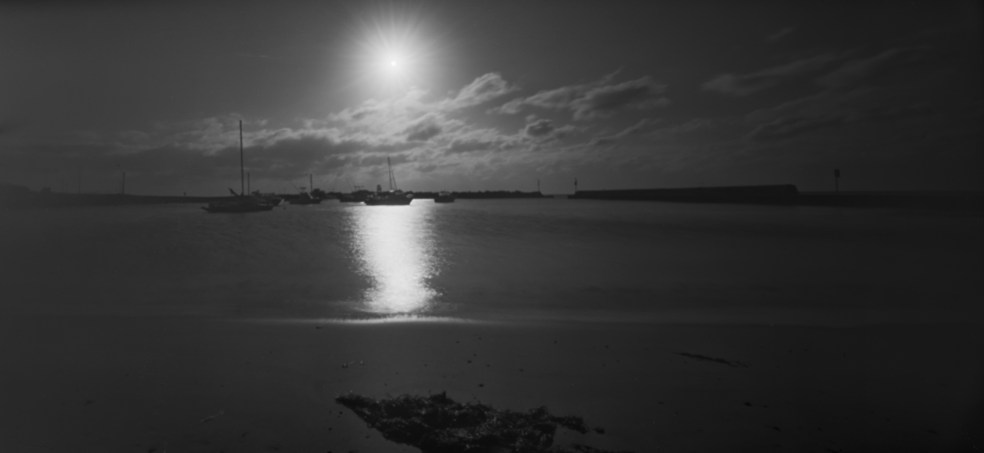
Sunday morning. Up early. Down to the harbour. Strong latte from the mobile cafe serving coffee to stall holders setting up for the markets. Contemplate the wind, clouds, and sun hanging low in the autumn sky. It seems to have risen due east, almost straight down the line of the breakwater. Outside the still waters of the harbour, spindrift is floating off surf breaking on the point, but elsewhere a stiff breeze is flattening waves.
I setup my Holga WPC in the shelter of the harbour to celebrate Worldwide Pinhole Photography Day. Exposures of all images were around 1-2 seconds. The camera is loaded with Fuji Neopan ACROS 100, and developed a couple of days later in Pyrocat-HD (1:1:100) for ten minutes. A bit later in the morning I manage to roll and sprain my ankle on the front door step, in the extreme sport of walking out the front…
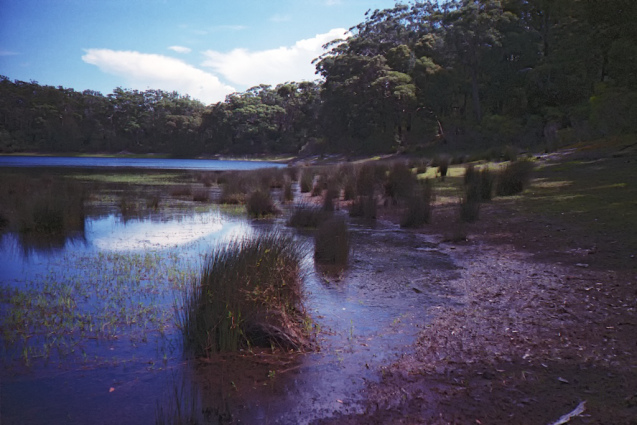
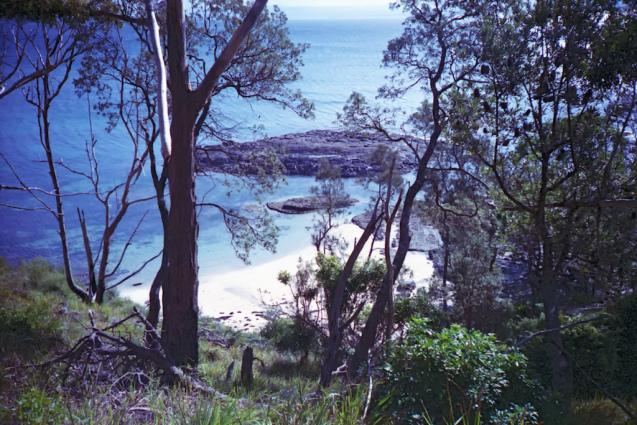
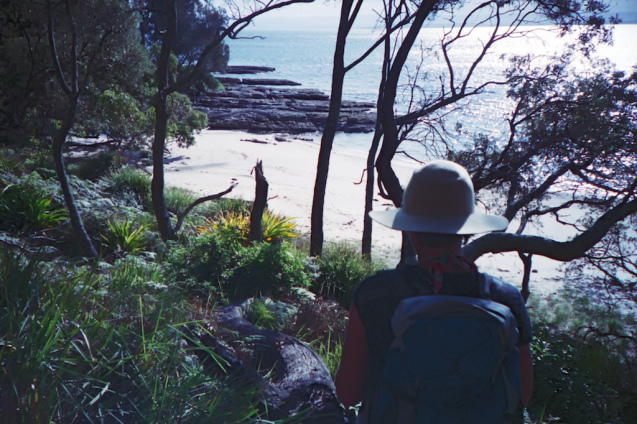
Over the last few months I have often been shooting rolls of 35mm film while out with my large format camera. Most of these rolls have been taken using either my Olympus OM-1, or Lomo LC-A. I use these cameras whilst walking to remember subjects for another another time, to reference the conditions, or simply because I want to take a photo of the world around me at that moment.
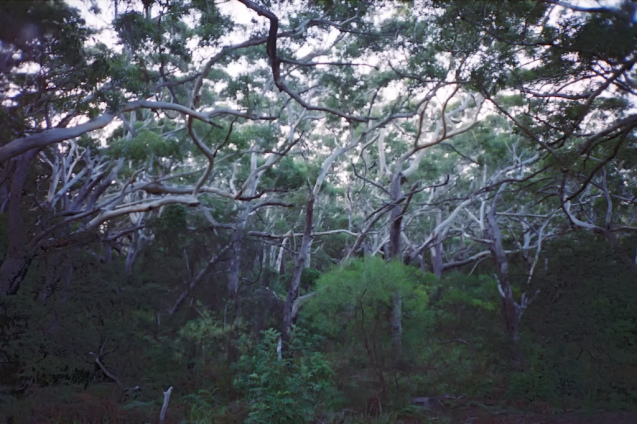
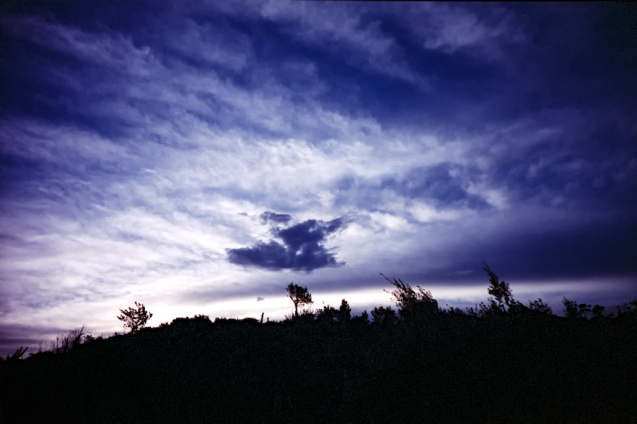
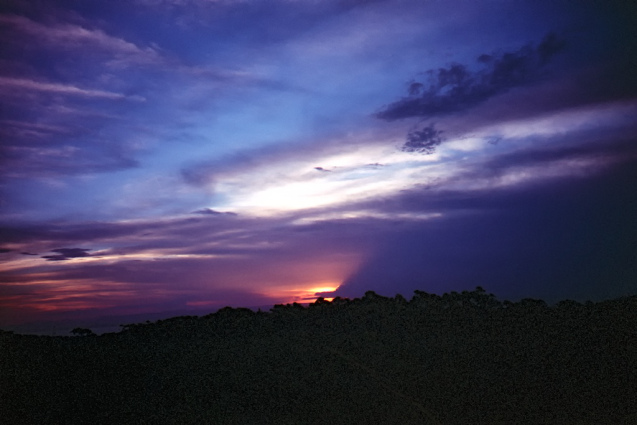
I particularly like this series taken with my Lomo LC-A on Fuji Superia 100 a few weeks back, when Melody and I visited Booderee National Park. This roll has only recently been developed.
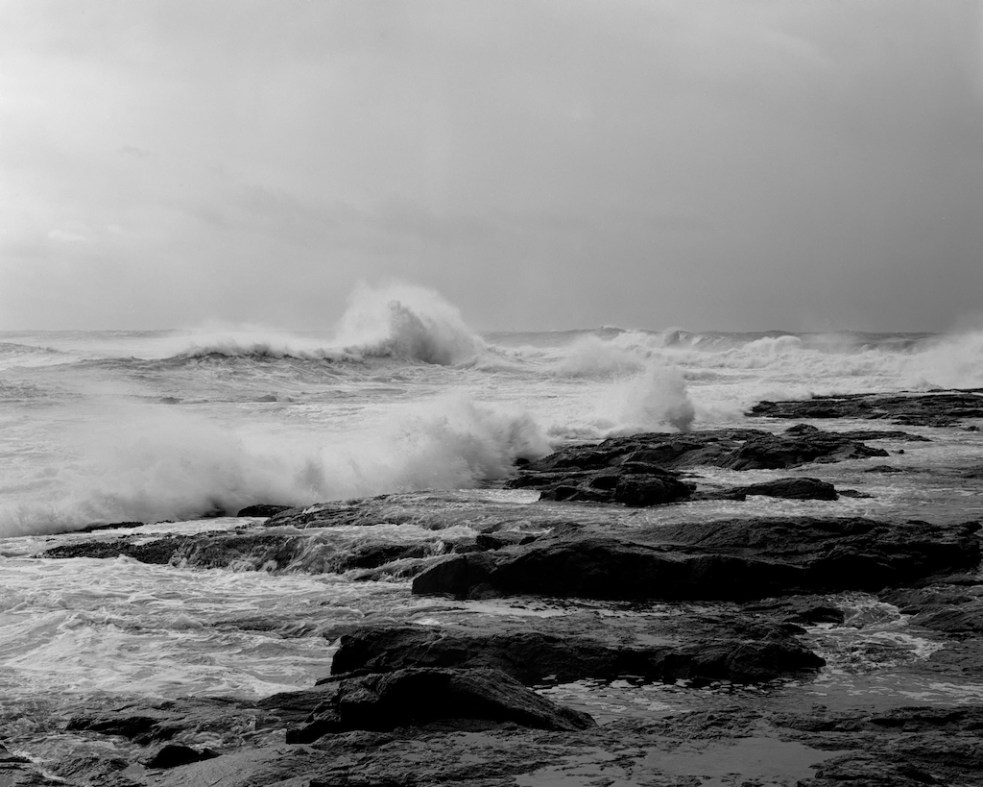
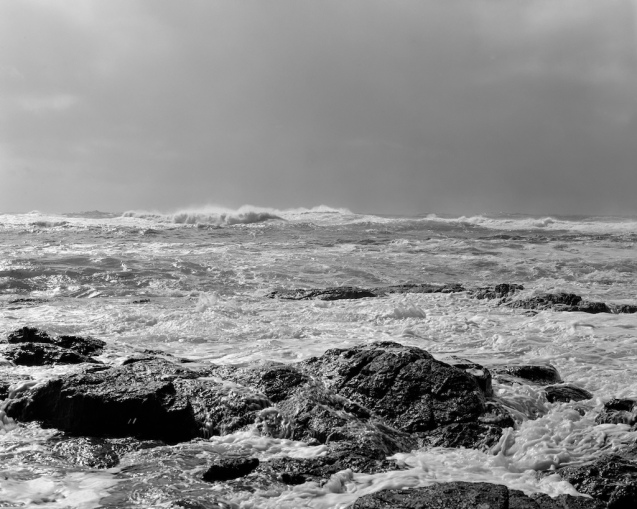
Saturday brought gales above 40 knots, a swell of 4-6 metres, spindrift from the top of waves, and repeated rain squalls pushing through. Over the past few weeks we have seen not just inches, but feet of rain, with protracted stormy weather.
The white caps in stormy seas are often likened to whites horses, or depicted as a battle in which waves pound land and erode shorelines. At Bass Point, waves move in three directions in a big swell, and from this confusion the surf seems to dance with the wind, rising in a pirouette, advancing like a chorus line, or leaping upwards in solo flight, in this ballet of the elements.
Dancing
Pirouette
Flight
Chorus lines
Pas de mare
Taken using Toyo-View 45CF with Nikkor-W 180mm and Tiffen Y12 filter, on Kodak TMax 400 (first photo only) and Fomopan 100, and developed in a mix of Xtol(1:2)+Adonal(1:200).
It has been about a year since I have been to Bombo. On my last visit I rolled my ankle on a rock, breaking a bone in my foot. Lately we have had heavy weather, so in a break between downpours, I headed to the old quarry at Bombo hoping that waves might be breaking over the sea walls.
Waves on columns
Bombo seemingly was named after Thumbon, a local indigenous leader, at the time of the settlement of the Kiama district. When the railway was first built south from Sydney, it stopped just north of Kiama at Bombo, where the basalt quarries provided blue metal for concrete, building railway lines and roads.
Old basalt quarry
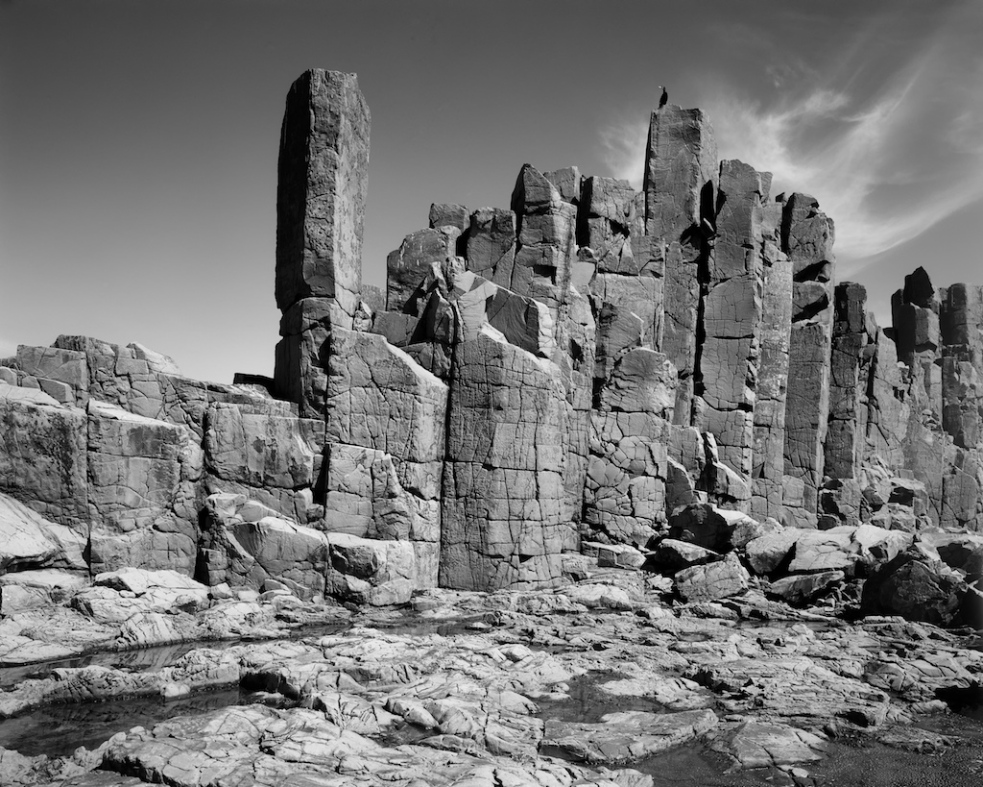
Bombo headland has geological formations of hexagonal basalt columns of international significance, abutting sandstone formations, which have reversed magnetic polarities from a time when the North and South Magnetic Poles were reversed. Rocks of Permian age throughout the world show a reversed polarity and this unique formation is used for “intercontinental paleomagnetic correlation of Late Palaeozoic rock sequences.”
Quarry pools
Quarrying began at Bombo headland in the 1880s. Basalt was carried to Sydney by dozens of small vessels known as the Stone Fleet until the railway line was built. The Irish miners employed to quarry the basalt, left rock columns and walls adjacent to the ocean protecting the works from the onslaught of the sea.
Pool and pillars
Today part of the old quarry is used for a sewerage plant, but that is largely concealed from the coastal walk that wends its way around the headland from Kiama via Bombo to the surf break known locally as The Boneyard, and then on to Jones Beach and Minnamurra.
Watchtower
On most days the headland is deserted, with the exception of seabirds watching for fish from the columns, just above the waves which pound along the walls.
Hexed
Here and there a few broken columns reveal their hexagonal structure. Where waves crash through gaps, it seems as though the fortress wall has been breached.
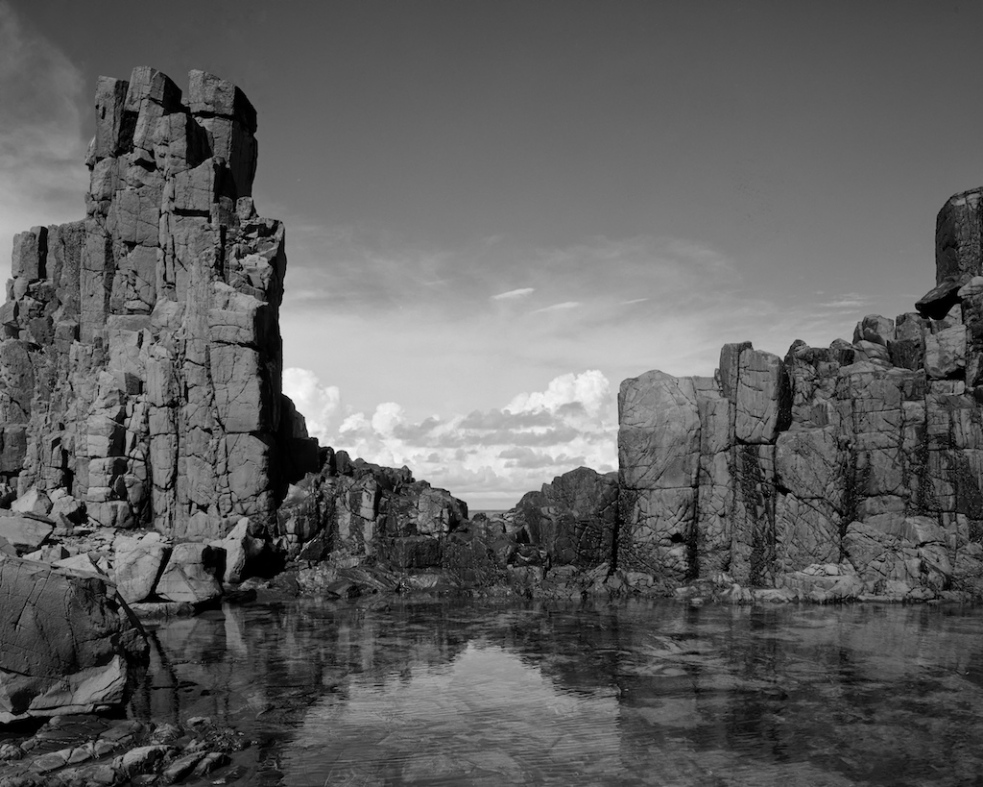
Window
The break in the wall opens a window to the ocean, clouds and the swirling tides.
Foaming sea
On occasions the surging sea rushes over these formations, and once I got struck by water falling over the other side. Although the headland resembles a ruined fortress, or rock amphitheater for waves with seabirds as an audience, local children seemingly also call it Toothbrush Island.
Toothbrush Island
Wave action shots were taken using Kodak TMax 400, except for the last one in series, which was made using Fomopan 100 along with the rest, using Toyo-View 45CF field camera with Nikkor-SW 90mm f/8 lens, and Tiffen Y12 filter. The film sheets were developed in a mix of Xtol (1:2) and Adonal (1:200).











 Peter de Graaff